Egbele Benjamin has been telling stories through clothing long before most people started paying attention. Known as "Benny", he's the style consultant and creative director behind Benny Styling, based in Lagos, and this year's AMVCAs gave a glimpse of what that looks like at scale. He dressed Bolaji Ogunmola, the actress, filmmaker and producer behind Gingerrr, which picked up nine nominations, including Best Movie, as well as Riyah Abdul, the official red carpet host for AMVCA 12, and Hawa Magaji, who hosted the red carpet for Guinness Africa.
Months later, the ceremony has faded from timelines, but Benny's work hasn't lost any of its relevance. His path here started in 2023 as a project manager for high-fashion shows, learning the industry from the inside before he ever styled a client of his own. That background shows in how deliberate his process is now, treating each look less like an outfit and more like a full creative brief.
His scope goes well beyond red carpets and award nights, too. He's a resident stylist on television and has styled names like Idia Aisien, Funke Akindele and Waje. His work has been featured in several homegrown publications, including BellaNaija Weddings and Pulse. We chatted with Benny to pull back the curtain on the journey from moodboard to the final look - and what it takes to make a statement under the spotlight.
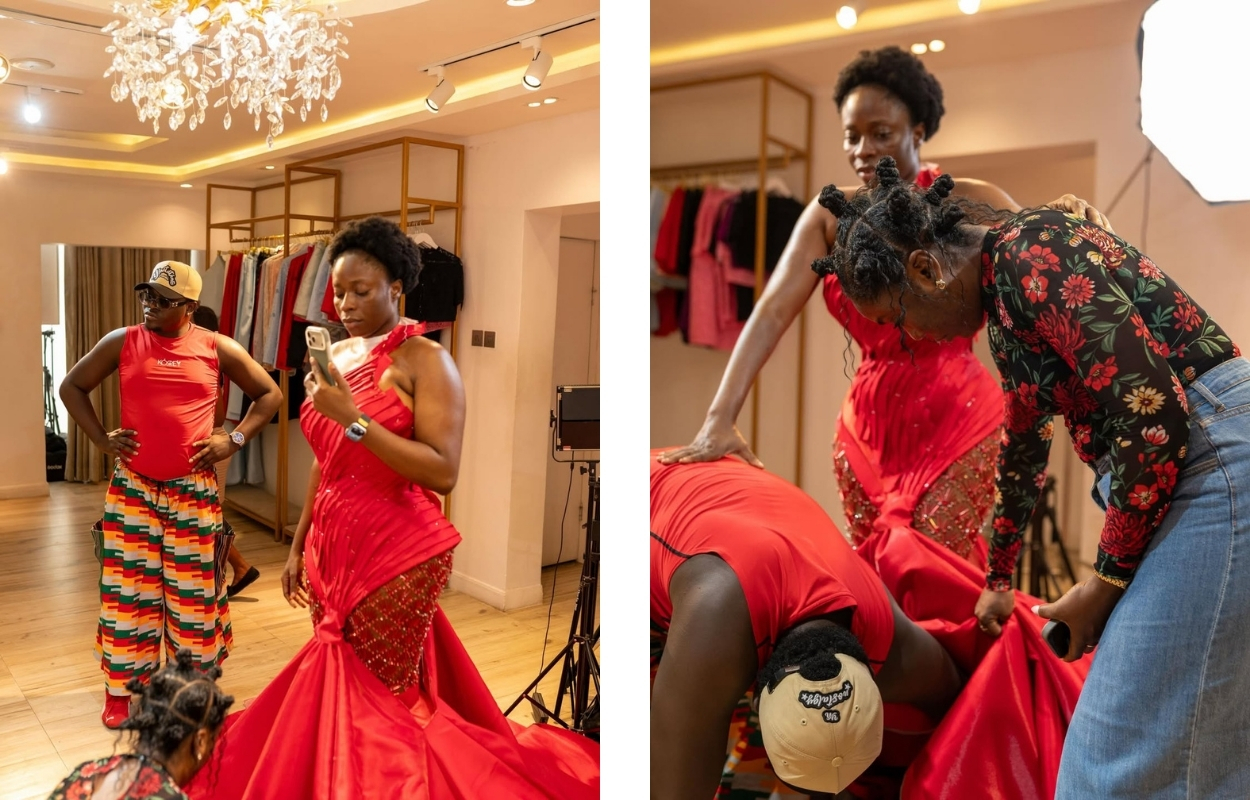
Benny and Bolaji Ogunmola review the details of Bolaji’s award ceremony look ahead of the AMVCA.
- How did you get into styling, and what drew you to red carpet and event styling specifically?
BENNY: Styling for me started as a deep love for storytelling through fashion. I’ve always believed clothing is more than fabric. Clothing is identity; it is emotion, confidence, and sometimes even power. What drew me specifically to red carpet and event styling was the transformation process. I love creating moments that people remember. There’s something beautiful about taking an idea from imagination to reality and watching someone step onto a carpet feeling completely elevated and seen. Red carpets are also where fashion, culture, glamour, and personality all meet at once, and that excites me creatively.
- How would you describe your aesthetic and the approach you bring to dressing clients for a high-profile event like AMVCA?
BENNY: My aesthetic is intentional, cinematic, and detail-oriented. I love looks that feel luxurious yet remain emotionally connected to the person wearing them. For an event like AMVCA, I approach styling almost like directing a visual experience. Every detail matters: the silhouette, the fabric movement, the hair, the accessories, the mood, and even how the client carries the outfit. I always aim for looks that feel timeless but still commanding enough to own the moment.
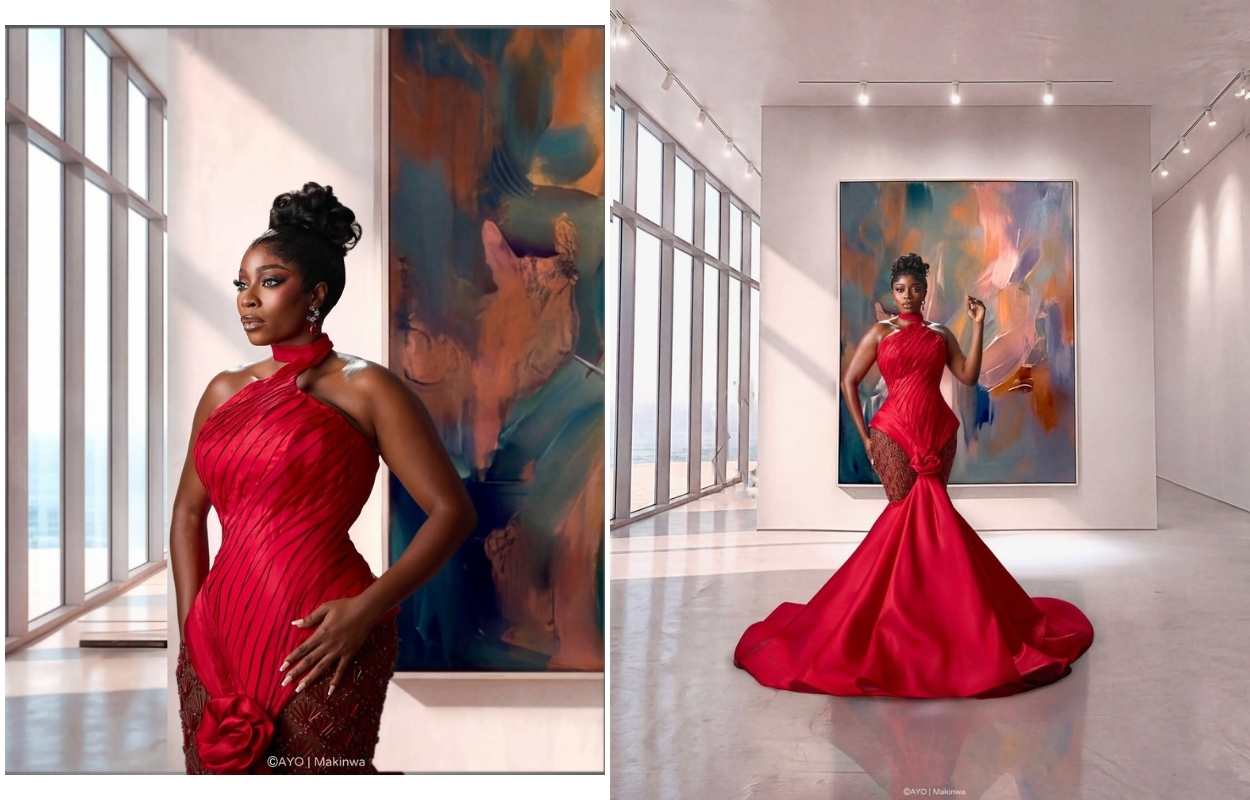
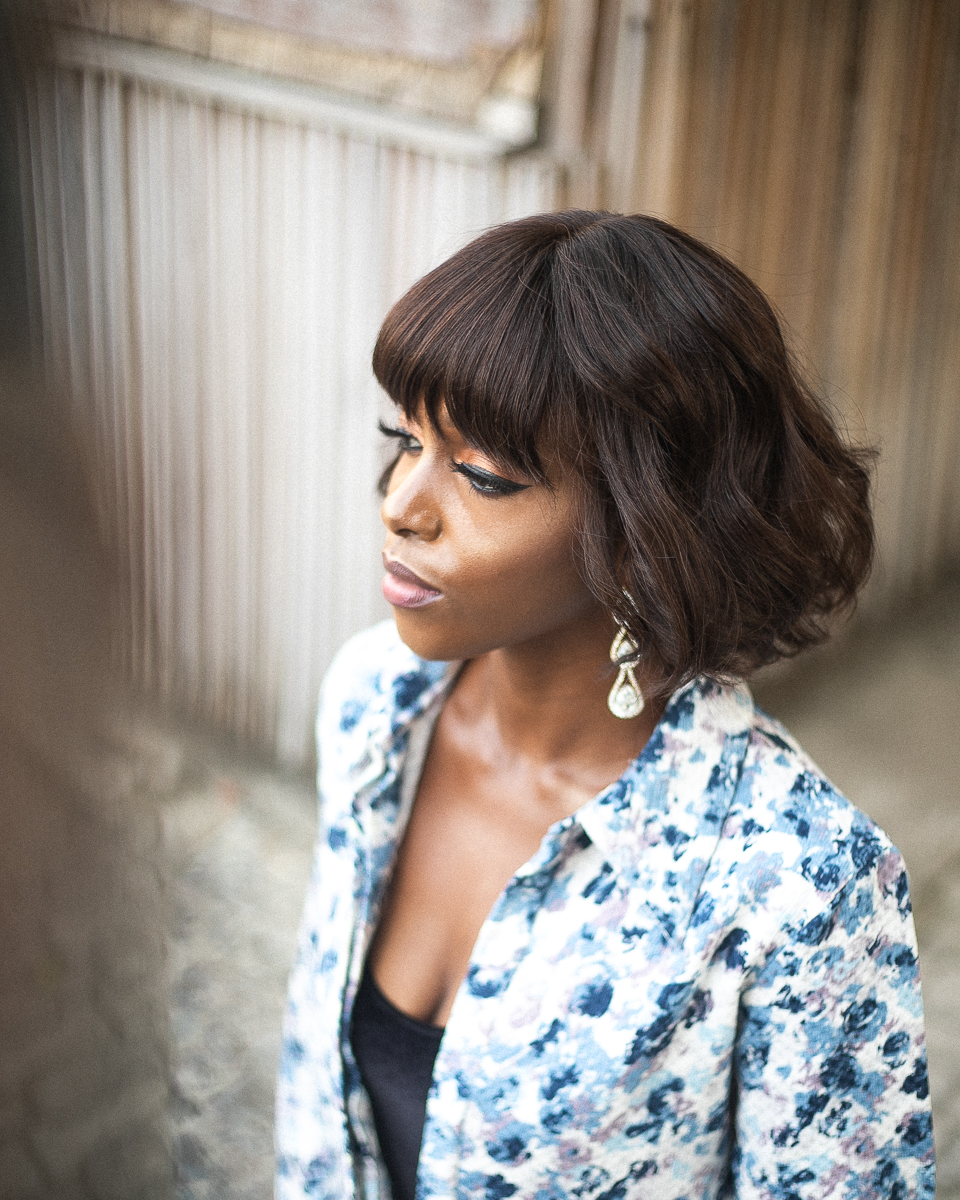
Bolaji Ogunmola in Yemi Shoyemi, photographed by Ayo Makinwa.
- Walk us through your process from the moment a client confirms with you to the final look on the night. How does it all come together?
BENNY: The process usually starts with understanding the client's personality, the image they want to project, and how they want to feel. From there, I begin concept development and moodboarding. Once we establish direction, I start reaching out to designers, sourcing fabrics, discussing construction details, and planning fittings. Then comes refining the vision through accessories, glam direction, rehearsals, and fittings until everything aligns perfectly. When event day finally arrives, the energy shifts completely into execution mode with final steaming, dressing, quick adjustments, timing coordination, and making sure the client steps out ready to own the moment.
- How far in advance did you start working on the looks, and what did the research and sourcing phase look like?
BENNY: For AMVCA, preparations started weeks ahead because these looks require a lot of coordination. The research phase involved studying global red carpet references, current fashion movements, cultural influences, and also understanding what would feel fresh for each client individually. Sourcing is always one of the most intense parts because it involves conversations with designers, fittings, accessory pulls, and ensuring every element works cohesively together.
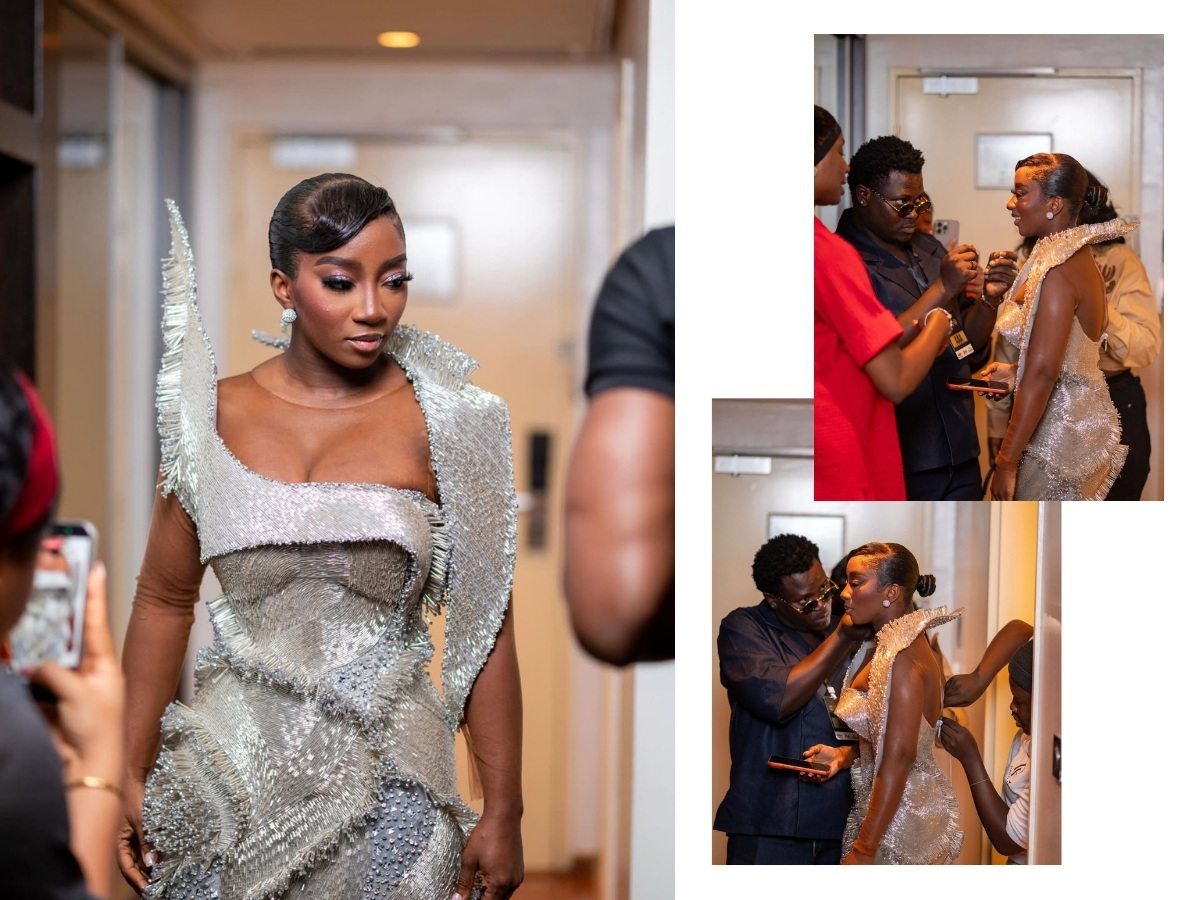
Benny adds the finishing touches to Riyah Abdul’s red carpet look.
- There is a perception that the polished editorial photos that drop right after an event were actually shot days before. Is that how you worked for AMVCA, and how does that pre-shoot process work for you?
BENNY: Yes, sometimes pre-shoots happen before the actual event day because timing on red carpet days can be extremely tight. The pre-shoot process helps us capture the creative direction properly without the pressure of event logistics. However, it still requires full glam, styling precision, lighting direction, and coordination. People often think it’s simple, but it’s actually a production on its own.
- What happens between the pre-shoot and the actual event night? Are there adjustments, swaps or last-minute decisions being made?
BENNY: Absolutely. Fashion is very fluid, especially on event days. Sometimes accessories change, hairstyles evolve, outfits require adjustments, or we completely rethink certain details based on how everything comes together in real time. Last-minute decisions are honestly part of the process. The goal is always to make sure the final result feels effortless, even when there’s a lot happening behind the scenes.
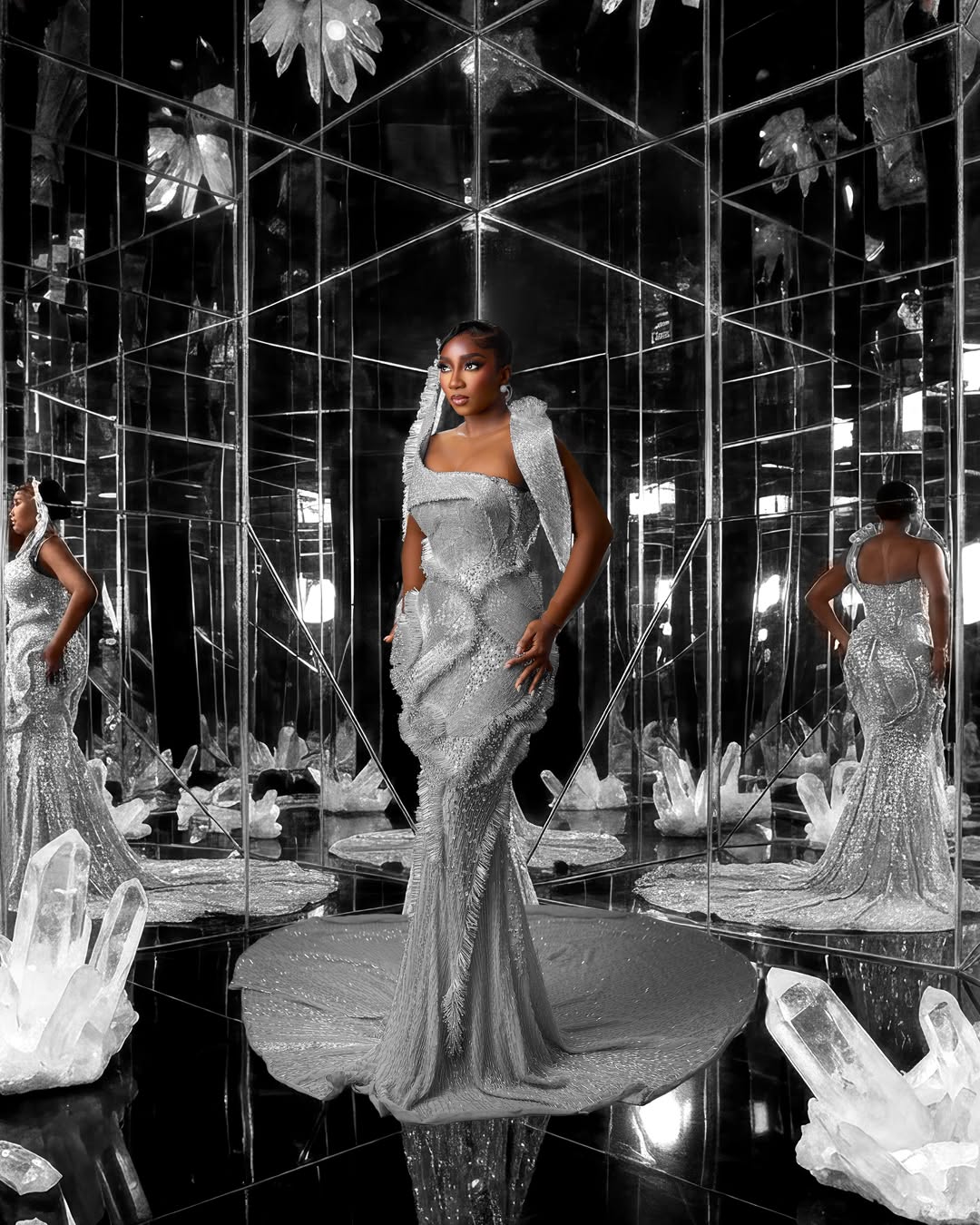
AMVCA red carpet host Riyah Abdul wears @firstladyng, photographed by Ayo Makinwa.
- You dressed multiple talents for the same night, including Riyah Abdul, Hawa Magaji and Bolaji Ogunmola. How did you make sure each look felt distinct and personal to each individual?
BENNY: I never approach clients with a one-size-fits-all mindset. Every woman has a different energy, presence, and story. With Riyah, the direction leaned more refined and elegant. Hawa’s look carried a different softness and sophistication, while Bolaji’s styling embraced boldness and drama in a very intentional way. I wanted each person to feel themselves authentically while still contributing to the larger visual impact of the night.
- How much does a client’s personality shape the direction of their look, and can you walk us through how that played out with one of your clients this year?
BENNY: A client’s personality shapes everything. Styling should never overpower the person wearing the outfit. One example this year was working with Bolaji Ogunmola. She has a very confident and expressive presence, so the styling direction embraced structure, elegance, and bold glamour while still allowing her personality to shine naturally. The goal was not just to dress her beautifully, but to make the look feel believable on her.
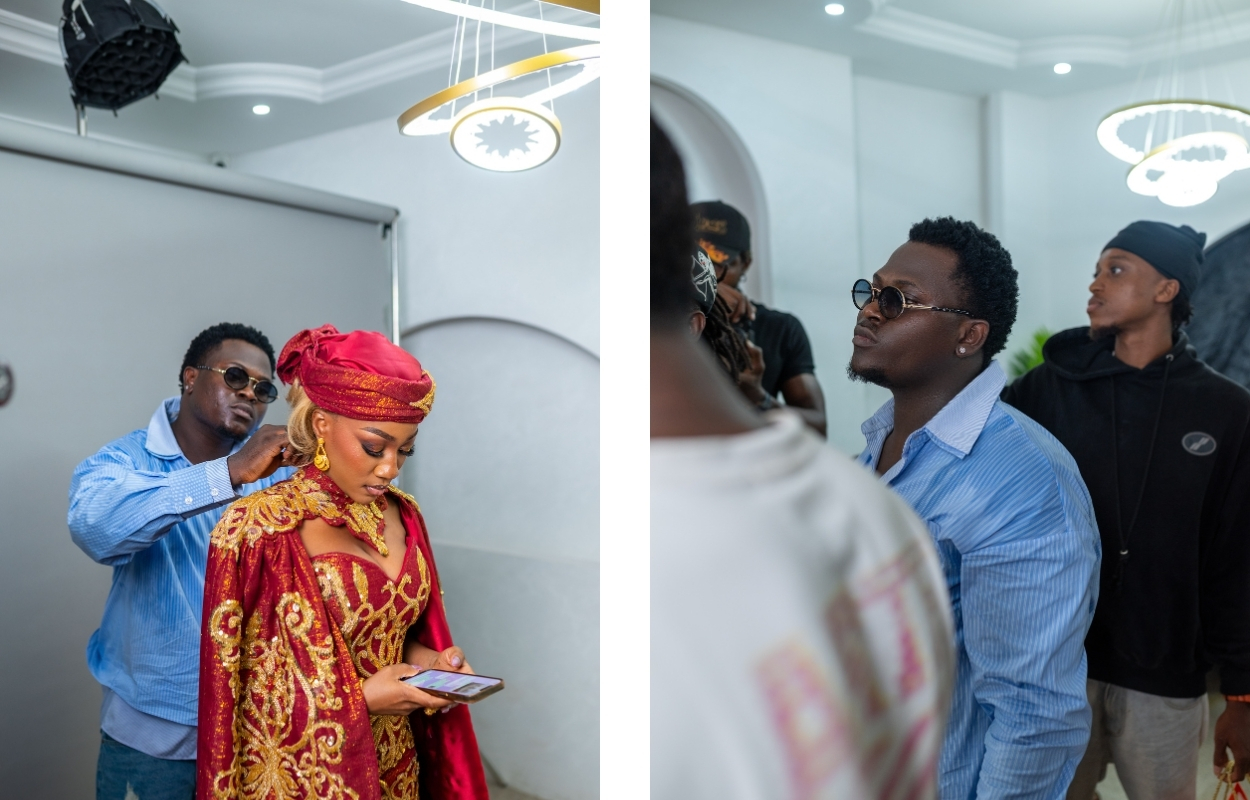
Benny and Hawa Magaji during Hawa’s AMVCA Cultural Day photoshoot. BTS photography by @pjvisuals_.
- For Cultural Day specifically, how did you approach translating each client’s identity or heritage into something that felt authentic and fashion-forward at the same time?
BENNY: Cultural Day is always special because it allows us to celebrate heritage through fashion. My approach was to respect traditional elements while still pushing creative boundaries. We explored silhouettes, textures, craftsmanship, and styling details that honoured culture without making the looks feel like costumes. It was important that every outfit felt rooted in identity but still modern and elevated.
- What do you want people to feel or take away when they see your work on a red carpet, and what did this year’s AMVCA represent for you in your career?
BENNY: I want people to feel emotion, intention, and excellence when they see my work. I want them to understand that styling is not just about clothes. It is about storytelling and creating unforgettable moments. This year’s AMVCA represented growth for me. It reminded me how much can happen when creativity, vision, teamwork, and resilience come together.
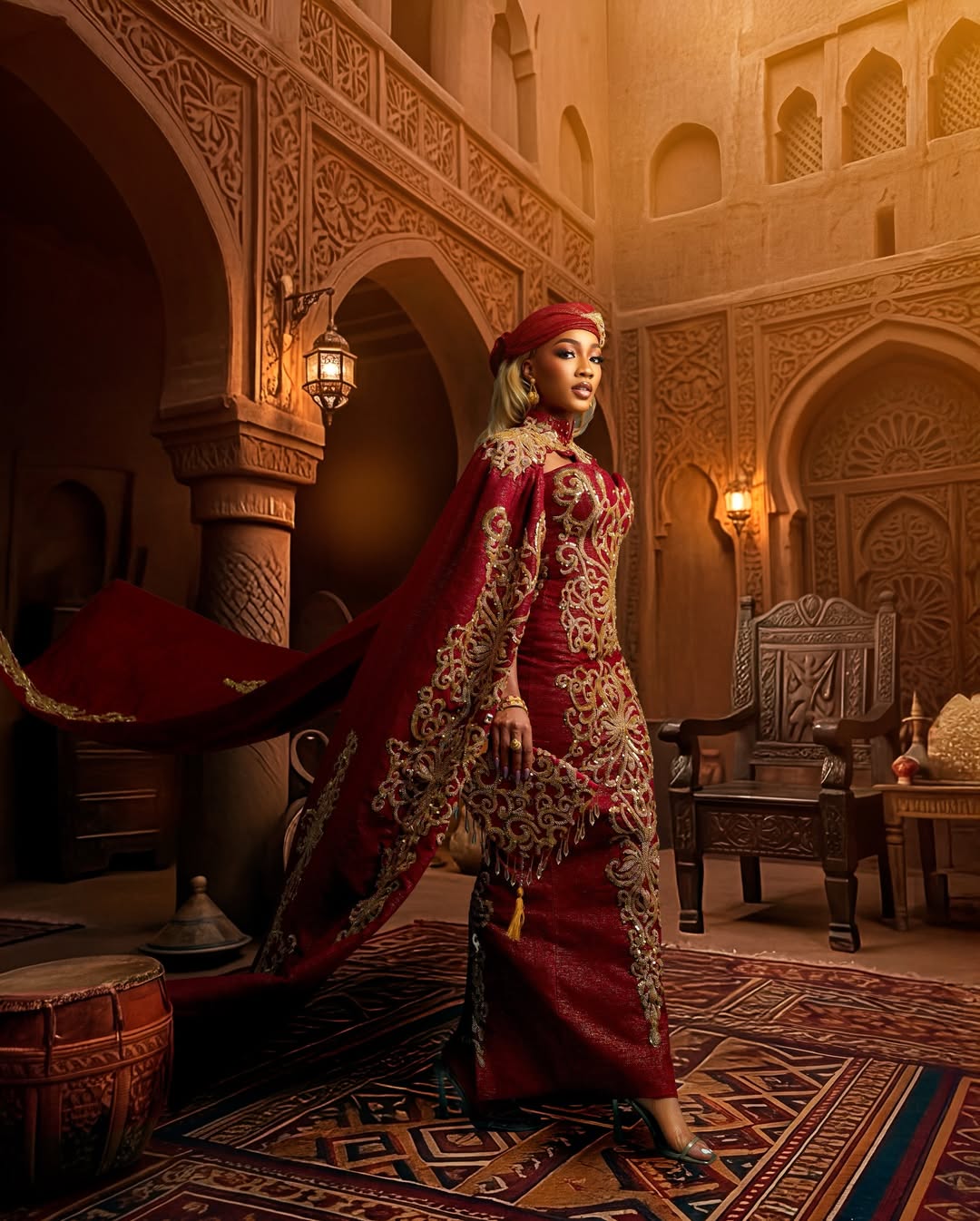
Hawa Magaji in @omalified, photographed by Ayo Makinwa.
- Looking back on your career so far, is there a styling moment or client transformation that stands out as especially defining for you?
BENNY: One of the most defining parts of my journey has been seeing clients step into confidence through styling. There are moments where someone looks in the mirror and completely transforms emotionally, and those moments stay with me. They remind me why I do what I do beyond just fashion.
- What has been your most challenging styling job to date, and what did it teach you about the industry or yourself?
BENNY: AMVCA this year was definitely one of the most demanding projects because of the scale, the multiple looks, the timelines, and the pressure to execute at a very high level. It taught me the importance of structure, patience, communication, and trusting my creative instincts even under pressure. It also reminded me how much teamwork matters in this industry.
- What does the future look like for you beyond styling? Are there other areas of fashion or creative direction you hope to explore?
BENNY: Beyond styling, I definitely see myself expanding deeper into creative direction, fashion production, and building larger visual experiences. I’m interested in creating projects that merge fashion, storytelling, media, and culture. I also want to continue building BennysStyling into a globally recognised creative brand that represents innovation, luxury, and African excellence.
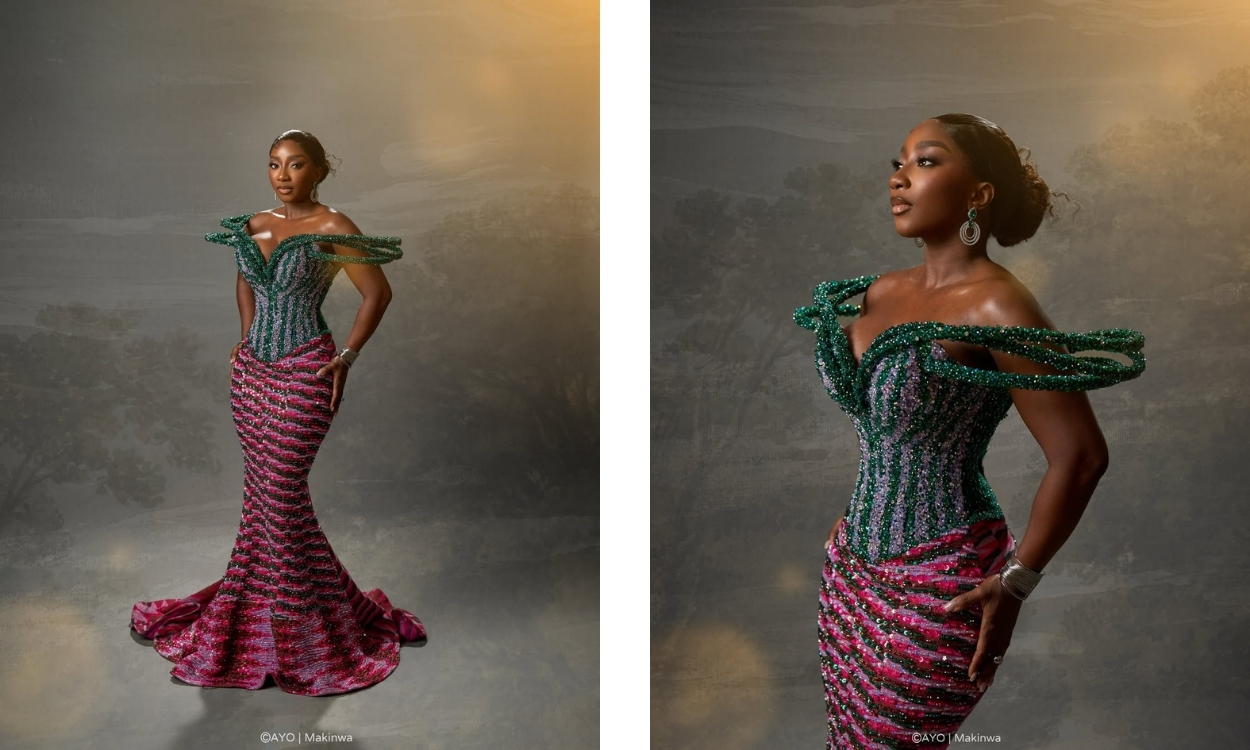
Riyah Abdul in YARTEL for AMVCA Cultural Day, photographed by Ayo Makinwa.
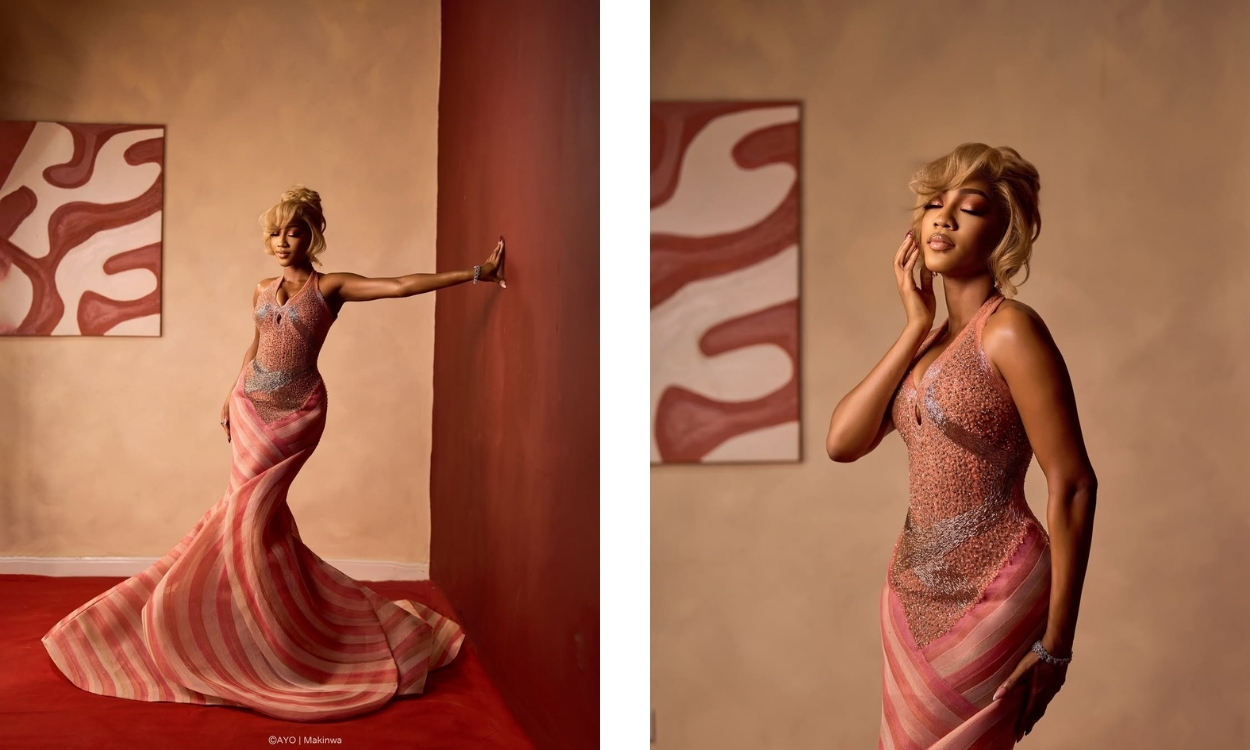
Hawa Magaji in @firstladyng as Guinness’ AMVCA red carpet host, photographed by Ayo Makinwa.
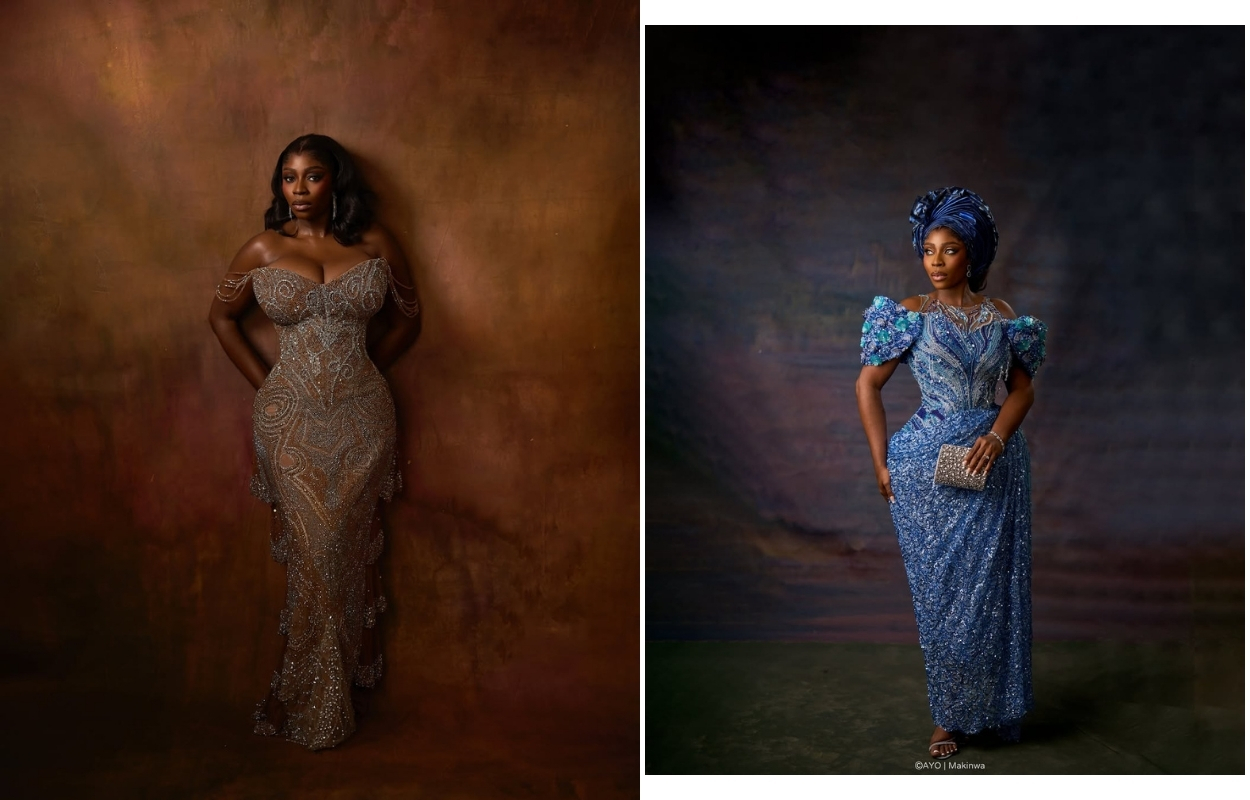
Bolaji Ogunmola in @burgundyatelier_ng for the AMVCA after-party (left) and @omalified for AMVCA Cultural Day (right), photographed by Ayo Makinwa.